In the last 20 years of ophthalmology, no procedure has caused more of a stir or changed as many lives as LASIK. LASIK (an acronym for Laser-Assisted in Situ Keratomileusis) uses the computer-guided excimer laser to reshape the cornea (the clear covering of the front of the eye) to correct nearsightedness, farsightedness, and astigmatism. In nearly all cases, LASIK is pain-free and takes about 15 minutes to perform for both eyes.
Prior to LASIK surgery, numerous tests will be performed on your eyes to determine the amount of correction needed. Your surgeon then reviews this data, which is then programmed into the laser’s computer to create a customized treatment plan for your eyes. During your treatment, a secondary laser (femtosecond) is used to create a thin flap of corneal tissue, which will serve after surgery to make healing more comfortable. This technique replaces the old metal blade system that used to be used for first-generation LASIK procedures. The protective flap is then moved aside to expose the layer of corneal tissue that will be reshaped using the excimer laser. Once the resculpting is done, the protective flap is set back in place. The flap does not require sutures because the natural collagen generated by the cornea will act as a natural glue to hold the flap in place.
Once LASIK is completed, the corrected shaping of the cornea will now allow light passing through the eye to focus properly onto the retina, and images will appear more clear. Most patients experience noticeable improvement within several hours after treatment. It does take about 30 days to achieve the final result. During that time, you would use eye drops to protect against infection and swelling. It is common for a patient to experience either an onset of dry eyes, or an increase in dryness, after LASIK. Artificial tears can be used liberally to keep the eye comfortable and healthy during healing.
LASIK is performed on each eye separately, but both eyes can be treated during the same session. Many patients can see well enough to drive and return to most normal activities in as little as 24 hours without glasses or contacts.
Am I a Candidate for LASIK?
You may qualify for LASIK eye surgery if you are experiencing the following symptoms:
You have blurry vision
You are tired of glasses and contacts
You are frustrated not able to see across the room
Street signs are fuzzy and blurry
You have a glasses prescription that has not changed for at least one year
You must be at least 18 years old.
What are the Benefits of LASIK?
LASIK provides benefits that go far beyond reducing your need for glasses or contacts. One of the most immediate advantages for most people is the dramatic improvement in vision. Most patients achieve 20/20 vision or better, allowing them to go about their daily activities without the constraints of glasses or the maintenance of contact lenses. The financial aspect is worth considering too. While LASIK requires an upfront investment, it often proves to be a smart financial investment over time. When you add up the ongoing costs of prescription glasses, contact lenses, contact lens solutions, and regular eye appointments over many years, LASIK often becomes the more cost-effective option. Physical activities also become much more enjoyable after LASIK. Whether you’re swimming, playing sports, or exercising, you won’t have to worry about glasses falling off or contacts drying out. Many patients especially appreciate waking up with clear vision, no longer needing to reach for glasses first thing in the morning. LASIK results typically last for many years, with some patients maintaining excellent vision for decades after their procedure. While natural aging may eventually affect your vision, the improvements from LASIK generally remain stable.
What to Expect During the LASIK Procedure
The LASIK procedure at Wolstan & Goldberg is safe and effective. It usually takes less than 20 minutes from start to finish. When you enter the treatment room, you’ll lie comfortably on a bed positioned under the laser system. Your eye doctor will place numbing drops in your eyes, ensuring that you remain comfortable throughout the entire experience. A small device will gently hold your eyelids open to prevent blinking during the procedure.
The first step involves creating a corneal flap with a laser. During this, you may feel some pressure but not pain. The LASIK surgeon then carefully folds back this flap to access the inner layers of the cornea. Next, you’ll focus on a target light while another laser reshapes your cornea according to your personalized treatment plan. This laser makes a soft clicking sound as it works. After reshaping the cornea, your LASIK surgeon carefully repositions the flap, which acts as a natural bandage to help your eyes heal quickly. The entire process for both eyes usually finishes within 15 minutes, after which you’ll rest briefly while your doctor evaluates the initial results.
How to Prepare for LASIK
Preparation for LASIK begins with a consultation, where specialists will determine if you’re a good candidate after thorough testing. Once scheduled for surgery, you’ll receive specific instructions to follow before your procedure. If you wear contact lenses, you’ll need to stop using them before surgery, typically two weeks for soft lenses and longer for rigid lenses. This allows your corneas to return to their natural shape for accurate measurements. Avoid applying makeup, lotions, or perfumes, as these products can interfere with the laser and healing process. Arrange for someone to drive you to and from the clinic, as you won’t be able to drive immediately after the procedure. Also, make sure to wear comfortable clothing and avoid bulky accessories that might get in the way during surgery. On the morning of your procedure, eat a light meal and take any regular medications unless advised otherwise. Many patients find it helpful to practice relaxation techniques to stay calm during their LASIK experience.
LASIK Technology
IntraLase FS Laser for All-Laser LASIK
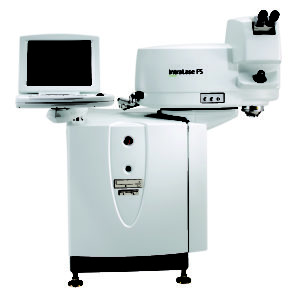
Wolstan & Goldberg Eye Associates offers an all-computerized, all-laser LASIK, using the IntraLase® FS. As your LASIK treatment begins, our surgeon must gain access to your cornea. Traditionally, this access was gained by a mechanical microkeratome, and in the past our surgeons have had excellent results with this platform. However, our surgeons feel confident that with IntraLase® FS we can offer the next the next trend in laser refractive surgery also known as Sub-Bowman Keratomileusis (SBK).
SBK provides the advantages of both PRK and LASIK by designing a thinner more precise flap that maintains greater corneal strength and reduces the risks of dry eyes after LASIK. With its amazing accuracy, the IntraLase® FS makes it possible for some patients to reconsider laser vision correction.
Monovision – LASIK for 40 and older
Most people over 40 years of age gradually lose the ability to read small print without reading glasses. This condition is called presbyopia. Although we may call this “reading vision,” it is also the vision we use for eating, applying makeup, or reading a computer.
Some nearsighted people who are also presbyopic (over 40) may still be able to overcome this condition. When they remove their glasses or contact lenses, they can use their nearsighted refraction to compensate and see up close. However, after LASIK, when the natural focus of both eyes has been corrected for clear distance vision, even nearsighted patients over 40 will require reading glasses.
To decrease the need for reading glasses, the technique of monovision may be helpful. With monovision, our surgeon fully treats one eye (usually the dominant eye) for distance, and the other eye for near vision. Monovision can help you maintain reading vision in one eye to avoid total dependence on reading glasses.
Today, many people are already using monovision with contact lenses or glasses. To see if Monovison LASIK is right for you, feel free to talk to our surgeons.
Staar Visian ICL™ – Implantable Collamer Lens
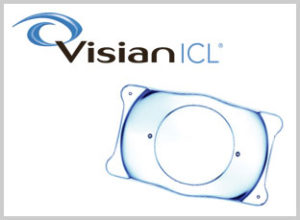
We are among the first to offer the the Staar Visian ICL™. Instead of wearing glasses or contact lenses, patients can have this lens implanted into their eye for permanent correction. In fact, the Visian ICL™ finally offers a vision correction option for patients who had previously been told they were not good LASIK candidates. Wolstan & Goldberg Eye Associates can offer the new Visian ICL™ as a vision correction alternative for patients who have high myopia (-20 D), thin corneas, or significantly dry eyes.
The implantable Staar Visian ICL™ provides our patients with the benefits of the thinnest, most flexible ICL to date. It is maneuvered into position behind the iris, providing a very natural appearance to the eye. Its flexibility also allows a smaller incision than is possible with other ICLs.
Staar Surgical Co. defines “ICL” as short for “implantable Collamer® lens.” The Visian ICL™ Collamer® is a unique blending of polymer plastic and natural collagen, a material naturally found in the body. This produces a lens that is highly biocompatible, virtually eliminating the chance for rejection or other complications that may result from purely synthetic materials.
CustomVue LASIK
Custom LASIK with Wavefront Technology
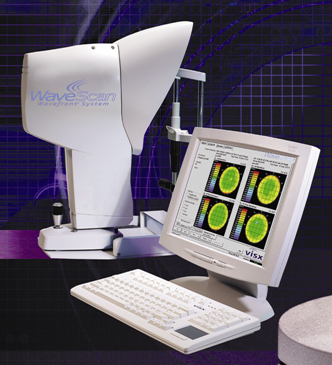
Wolstan & Goldberg Eye Associates offers CustomVue™ LASIK to the South Bay Los Angeles area. This Wavefront™ LASIK technology dramatically reduces higher order aberrations and increases our ability to provide excellent vision.
In conventional LASIK procedures, eye measurements are taken using the same type of equipment used in the creation of glasses and contact lenses. It does not correct for microscopic irregularities in the surface that might create aberrations in the field of vision, similar to looking through tiny flaws in a window pane.
In Custom LASIK with Wavefront technology, a diagnostic device called an aberrometer maps the entire optical surface and path of your eye, including the tiny distortions and imperfections naturally present in all eyes. The collected information is essentially a unique “fingerprint of your vision”, giving your surgeon much more detailed information for your eyes, and a much more precise treatment. This technology produces a visual result not possible before Wavefront technology existed.
Results of an FDA clinical trial of this technology demonstrated that an incredible 94 percent of patients treated were able to see 20/20 or better without glasses. Plus, four times as many people in the trial were very satisfied with their night vision after LASIK, compared to their night vision before with glasses or contacts
Contact one of our experienced surgeons to learn more about the advantages of Custom LASIK.
What is the Recovery Process After LASIK?
Recovery after LASIK is surprisingly quick for most patients. Immediately following your procedure, you’ll rest with your eyes closed briefly before your surgeon checks them. You may experience temporary burning, itching, or a feeling like something is in your eye. These sensations typically fade within hours. Vision will likely be blurry at first, but it will gradually improve throughout the day. Many patients notice significant improvement by evening, with vision continuing to stabilize over the following days.
Using sunglasses can help with any light sensitivity you might experience. During the first week, you’ll use prescribed eye drops to prevent infection and reduce inflammation. Artificial tears can be applied frequently to relieve dryness, which is the most common temporary side effect. Most patients return to work and normal activities within 1-2 days, though it’s best to avoid strenuous exercise for about a week. Swimming pools, hot tubs, and similar environments should be avoided for two weeks to prevent infection. Follow-up appointments are essential to monitor your healing progress, with the first check typically scheduled for the day after surgery, followed by visits at one week and one month. Most patients achieve their final vision result within a month. However, subtle improvements may continue for up to six months.
Contact Us
Contact Wolstan & Goldberg Eye Associates located in Torrance today to learn more about the advantages of the Staar Visian ICL™ implantable lens.

 What is LASIK Eye Surgery?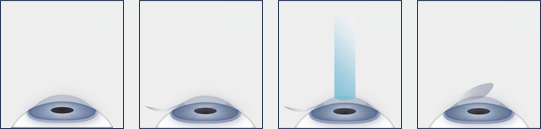
 IntraLase FS Laser for All-Laser LASIK
 Staar Visian ICL™ – Implantable Collamer Lens